Multi-tenant project management platform for property marketing agencies
Property marketing agencies coordinate photographers, editors, and estate agents across dozens of clients and hundreds of projects every month. The typical workflow relies on phone calls, email chains, shared drives, and spreadsheets. As agencies grow, this manual coordination breaks down: projects fall through cracks, files end up in the wrong folders, and scheduling conflicts cost everyone time.
A multi-tenant project management platform that gives each agency a single system for the full project lifecycle: from request through photographer assignment, image delivery, and invoicing, with automated file management and calendar integration.
Manual folder creation or scheduling conflicts
Team roles with tailored access
Scheduling, file management, and notifications
The problem
Property marketing is a coordination-heavy business. A single project involves an estate agent requesting a shoot, an agency assigning a photographer, the photographer attending the property, uploading images, an editor processing them, and the agency delivering the final assets back to the agent. Multiply that across dozens of estate agency clients, each with multiple branches and staff members, and the administrative overhead becomes the bottleneck.
Most agencies manage this with a patchwork of tools: shared Google Drive folders created manually for each project, calendar invites sent by hand, pricing tracked in spreadsheets, and status updates communicated by phone or email. It works at small scale. It falls apart as soon as the volume increases or a second coordinator joins the team.
The agency needed a platform that could handle the complexity of multi-client, multi-role project management without requiring everyone to change how they work.
Multi-tenant architecture
The platform was built as a true multi-tenant system. Each marketing agency operates in its own isolated environment with its own clients, photographers, projects, and pricing. An agency admin sees everything across their organisation. An estate agent sees only their own branches and projects. A photographer sees only their assigned work.
Data isolation is enforced at the database level using row-level security policies. This is not application-level filtering that could leak data through a bug. Every query is scoped to the user’s tenant and role before it reaches the application code. Over 400 database migrations reflect the evolution of a schema designed to handle real-world complexity: agencies with multiple estate agency clients, each with multiple branches, each with multiple staff members placing project requests.
Project workflow
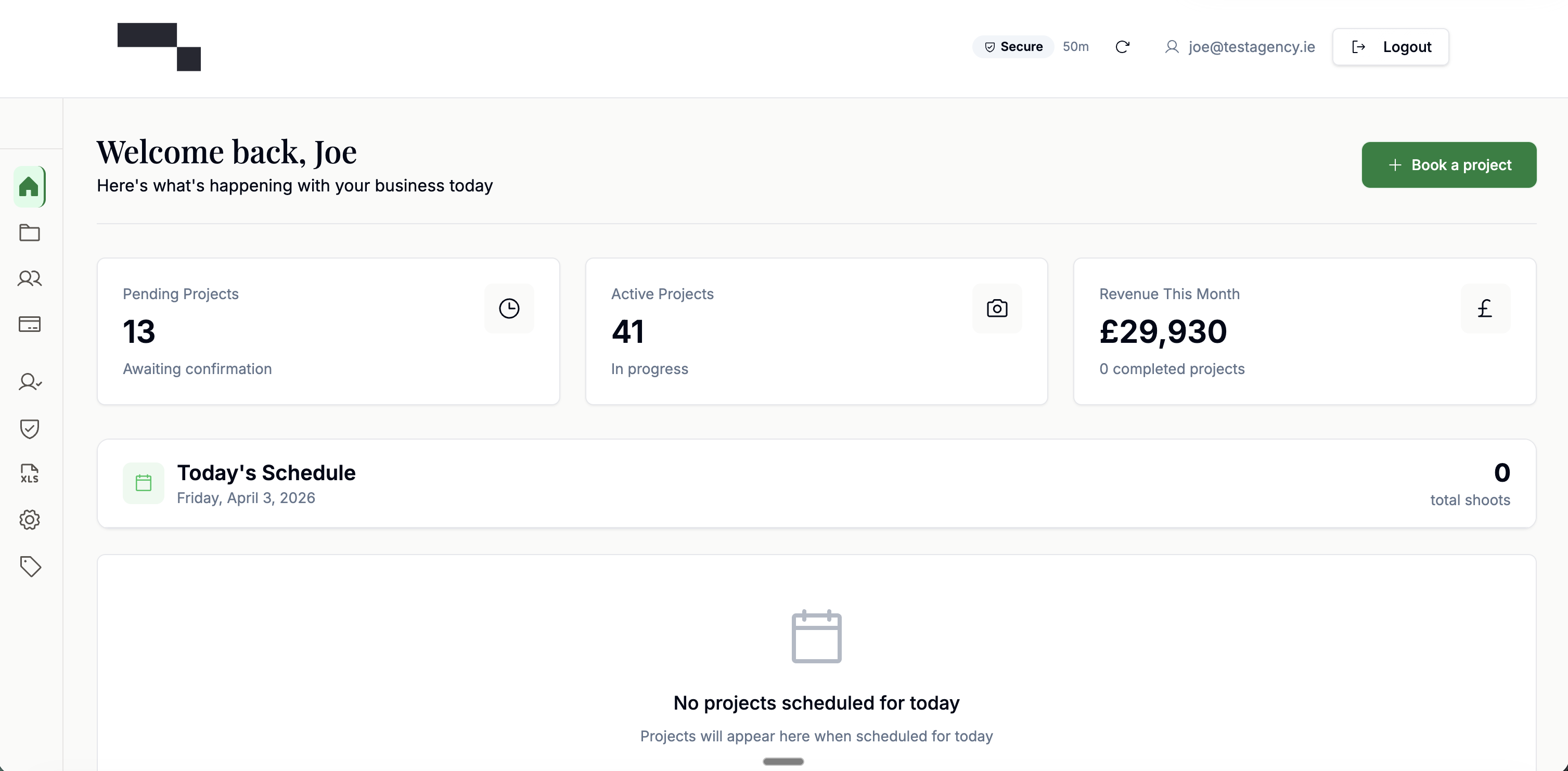
A project moves through defined stages: requested, assigned, photographed, images uploaded, edited, delivered. At each stage, the right people are notified automatically. The agency coordinator sees the full pipeline. The photographer sees their upcoming assignments. The estate agent sees the status of their request without needing to chase by phone.
Bulk project creation via CSV import handles the common scenario where an agency onboards a new estate agent client with dozens of existing properties that need photography. Rather than creating each project manually, the coordinator uploads a spreadsheet and the system creates the project records, assigns default pricing, and sets up the workflow.
Scheduling and file management
Two integrations removed the most time-consuming manual tasks in the daily workflow.
Google Calendar sync means photographer assignments create calendar events automatically. The coordinator sees availability before assigning, and the photographer gets the appointment in their existing calendar without switching to a separate system. Conflicts are visible before they happen rather than discovered on the day.
Google Drive integration automates what agencies previously did by hand for every single project: creating a folder, setting permissions so the right people can upload and download, and organising the folder structure consistently. When a project is created, the platform creates the corresponding Drive folder, sets permissions based on the assigned photographer and agency, and links it to the project record. The team never touches Drive directly.
Pricing and invoicing
Property marketing pricing is not straightforward. Different estate agency clients negotiate different rates. Some agencies offer package pricing, others charge per shoot with variations by property type. Rate changes need to apply to new projects without affecting existing ones.
The pricing system handles this with a hierarchy: default agency rates, client-specific overrides, and package-level pricing. When a project is created, the correct price is calculated automatically based on the client, the service type, and any applicable overrides. Invoices are generated from completed projects with all the line items already populated.
Role-based access
Six distinct roles govern what each user can see and do. System administrators manage the platform. Agency administrators manage their organisation, clients, photographers, and pricing. Managers oversee day-to-day project coordination. Estate agents request projects and track their status. Photographers see their assignments, schedules, and upload interfaces. Editors access the processing queue.
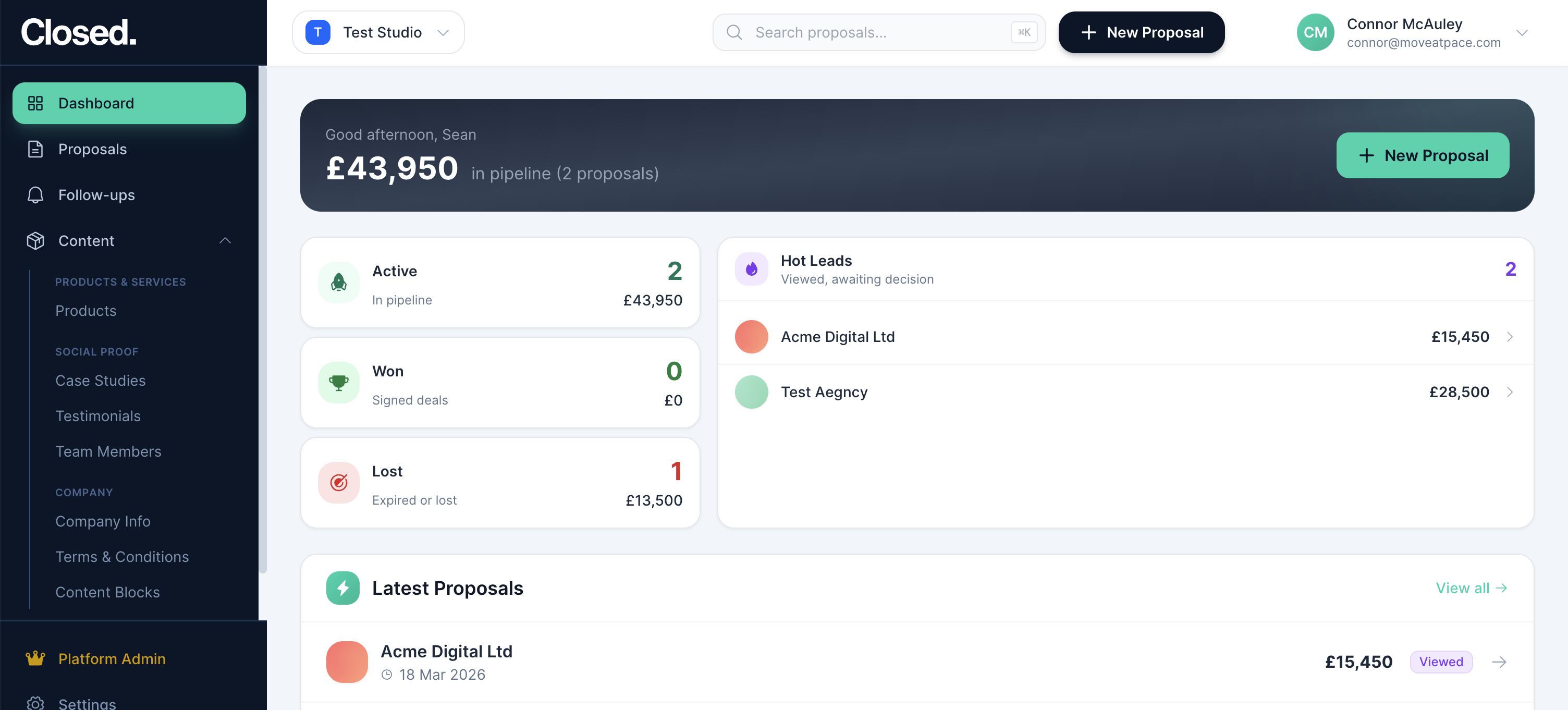
Each role sees a different version of the platform. The interface adapts: navigation items, dashboard widgets, available actions, and visible data all change based on who is logged in. A photographer never sees pricing. An estate agent never sees another agent’s projects. An agency admin sees the complete picture.
Results
The platform replaced a manual coordination process that consumed hours of administrative time every day. Projects move from request to delivery through a defined workflow where everyone knows what stage they are at without needing to ask. File management that previously required manual folder creation for every project now happens automatically. Scheduling that relied on phone calls and calendar checking is handled by the system.
For the agencies using it, the operational benefit is straightforward: the same team can manage significantly more projects without the coordination overhead scaling proportionally. The system handles the logistics so the team can focus on the work itself.