Proposal analytics and e-signature platform for service agencies
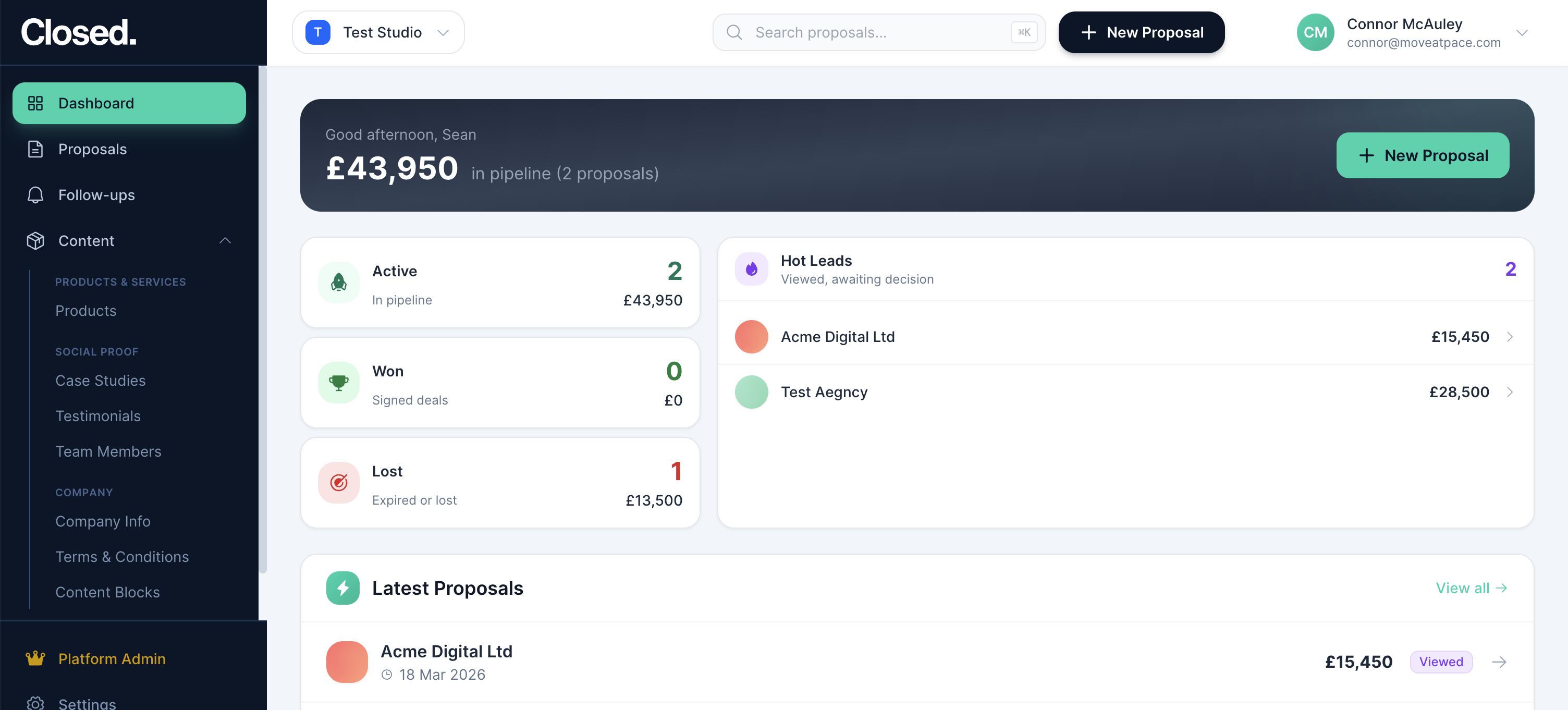
Service agencies spend hours building proposals in Word or Google Docs, then send them as PDF attachments with no visibility into what happens next. They do not know if the proposal was opened, which sections were read, or when the client made their decision. Follow-ups are guesswork. Signatures require printing, scanning, or a separate tool. The proposal itself, often the last thing a prospect sees before deciding, looks no different from a standard document.
A proposal platform with a visual builder, real-time engagement analytics, legally-binding e-signatures, and white-label capability, giving agencies a professional, trackable proposal experience under their own brand.
Proposal engagement analytics
Built-in e-signatures with audit trail
Custom domains with full brand control
The problem
For most service agencies, the proposal is the final touchpoint before a client decides. It carries the weight of the entire sales process. And yet, most agencies build proposals in Word, export to PDF, and attach them to an email.
The result is a document that looks like every other document the prospect received that week. There is no way to know whether it was opened, how long the client spent on the pricing section versus the methodology, or whether it was forwarded to a decision-maker. Follow-up timing is guesswork. If the client wants to sign, they print, sign, scan, and email it back, or the agency introduces a separate e-signature tool that breaks the experience.
The gap between the quality of the sales conversation and the quality of the proposal document costs agencies deals they should be winning.
Proposal builder
The builder was designed around how agencies actually construct proposals, not how generic document tools work. An eight-step wizard guides the user through the sections that matter for service proposals: hero, client overview, methodology, case studies, testimonials, team showcase, pricing, and terms.
Each section supports rich text, images, and video embeds. The layout updates in real time as content is added, so the author sees exactly what the client will see. Proposals can be duplicated from previous wins and edited, which means the second proposal takes a fraction of the time of the first.
The output is a branded, web-hosted proposal at a unique URL, not a PDF attachment. The client opens it in their browser, scrolls through a designed experience, and signs at the bottom. No downloads, no print-and-scan, no switching between tools.
Engagement analytics
Once a proposal is sent, the platform tracks how the recipient interacts with it. Scroll depth shows how far they read. Section dwell times reveal which parts held their attention and which were skimmed. Device tracking shows whether they opened it on mobile during a commute or on desktop in a focused session. An engagement score aggregates these signals into a single metric.
This is not vanity data. It changes how the agency follows up. If the client spent eight minutes on the methodology section and thirty seconds on pricing, the follow-up conversation is different than if they skipped straight to the cost. If the proposal was forwarded to a new email address, the agency knows a decision-maker is now involved. If it has not been opened after three days, an automated follow-up is triggered before the deal goes cold.
E-signatures
The platform includes legally-binding e-signatures so the entire process, from presentation to commitment, happens in one place. The client reads the proposal and signs at the bottom of the same page. No redirect to a third-party signing service. No broken flow.
Every signature captures a full audit trail: timestamp, IP address, user agent, and the exact version of the proposal that was signed. This is not a cosmetic “type your name” field. It is a legally defensible record of agreement that the agency can reference if a dispute arises.
White-label capability
Agencies selling to clients do not want a third-party brand visible in their proposals. The platform supports full white-labelling: custom domains, brand colours, logos, and complete removal of the platform’s own branding. The client sees a proposal hosted on the agency’s domain, styled in the agency’s identity, with no indication that a platform sits behind it.
Custom domain setup is handled through Cloudflare, with SSL provisioned automatically. The agency points a subdomain (e.g. proposals.theiragency.com), the platform handles the rest. The result is a professional, branded proposal experience that reinforces the agency’s positioning rather than undermining it with someone else’s logo.
Proposal lifecycle
Every proposal moves through a defined status lifecycle: draft, sent, viewed, signed, lost, or expired. The agency dashboard shows the full pipeline at a glance: how many proposals are out, which have been viewed, which are approaching their expiry date, and which have been signed.
Automated actions trigger at key lifecycle moments. A viewing notification tells the agency the moment a client opens the proposal. A follow-up email fires if the proposal has not been viewed within a configured window. An expiry reminder prompts the client before the proposal lapses. The agency sets the rules once and the system handles the timing.
Results
The platform replaces a fragmented process, Word documents, PDF attachments, separate e-signature tools, and guesswork follow-ups, with a single system where proposals are built, sent, tracked, signed, and managed.
Agencies using it know exactly what their clients do with every proposal. Follow-ups are timed and informed rather than arbitrary. Signatures happen in context rather than through a separate workflow. And the entire experience carries the agency’s brand, not a platform’s.
The commercial outcome is straightforward: proposals that look better, close faster, and give the agency visibility they never had into the decision-making process.