
Wearable data platform for performance coaching businesses
A performance coach managing multiple athletes needed to consolidate wearable data, subjective check-ins, and training metrics into a single view. Health data was scattered across apps. Identifying concerning patterns meant manually reviewing each athlete's numbers every week. The time spent on data review was time not spent coaching.
A performance monitoring platform that syncs wearable data automatically, runs weekly analysis across four health domains, flags concerning patterns, and generates coaching suggestions for the coach to review and approve.
Weekly analysis across four health domains
Wearable data sync from Oura Ring
Role-specific dashboards
The problem
Performance coaching generates a constant stream of data. Heart rate variability, resting heart rate, sleep quality, sleep duration, training load, body composition, mood, focus, motivation, stress. Each metric tells part of the story. The full picture requires looking at all of them together, over time, and spotting the patterns that indicate an athlete is thriving, plateauing, or heading toward overtraining.
Most coaches do this manually. They check their athletes’ wearable apps, review whatever the athlete self-reports, and rely on experience and intuition to connect the dots. It works with two or three clients. It does not scale. The more athletes a coach manages, the less time they have to actually review the data, and the more likely it is that a warning sign gets missed.
The coach needed a platform that could do the data aggregation and pattern recognition automatically, so the coaching time could be spent on interpretation and intervention rather than number-crunching.
Wearable integration
The platform connects to Oura Ring via OAuth, syncing health data automatically every day. Heart rate variability, resting heart rate, sleep duration, and sleep efficiency flow into the system without the athlete or coach needing to do anything.
The sync handles token refresh, API rate limits, and data gaps (athletes do not always wear their ring). When data is missing, the system flags it rather than filling in assumptions. The coach sees what is real and what is absent, which is itself a useful signal.
Beyond wearable data, the platform collects subjective metrics through athlete check-ins: mood, focus, motivation, decision fatigue, and perceived stress. These self-reported scores capture what wearables cannot measure and complete the picture that the automated analysis depends on.
State engine
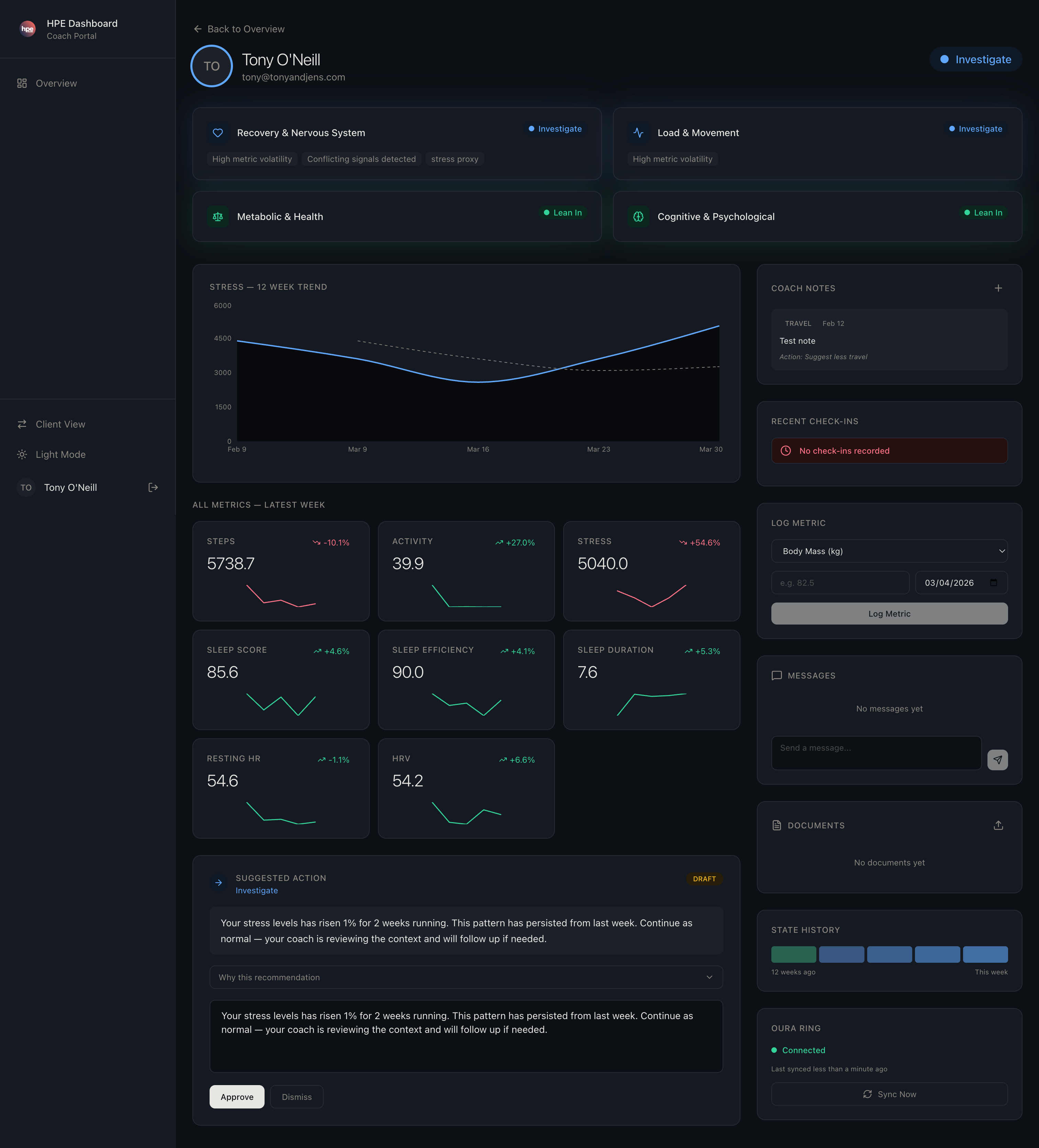
The core of the platform is a multi-step analysis engine that runs weekly across four domains: recovery (HRV, resting heart rate, sleep), load (training volume, strength frequency), metabolic (body mass, blood pressure), and cognitive (mood, focus, motivation, stress).
Each domain is evaluated independently using configurable thresholds. A single bad week does not trigger an alert. Two or more consecutive weeks of decline do. The engine looks for sustained trends rather than noise, reducing false positives that would erode the coach’s trust in the system.
Beyond individual domains, the engine detects compound risks: patterns where multiple domains degrade simultaneously. A sleep decline combined with rising training load and dropping motivation is a different signal than any of those in isolation. These cross-domain patterns are where the most consequential coaching interventions happen, and they are exactly what manual review tends to miss.
Coach and client views
The platform serves two audiences with fundamentally different needs. The coach needs to see everything: raw data, trend analysis, state classifications, and the reasoning behind each flag. The client needs to see their status, approved recommendations, and check-in prompts, without the complexity that would cause anxiety or confusion.
The coach dashboard shows each athlete’s weekly state as a colour-coded summary: green (progressing), amber (watch), red (intervene). Drilling into any athlete reveals the domain-level breakdown, metric trends, and the engine’s suggested actions. The coach can accept suggestions as-is, edit them, or override the system’s assessment entirely when context (travel, illness, life stress) explains the numbers better than the algorithm can.
The client dashboard shows their current state, approved coaching suggestions, and a prompt to complete their weekly check-in. They see what the coach wants them to see, nothing more. The separation ensures the platform supports the coaching relationship rather than replacing it.
Coaching suggestions
When the engine identifies a concerning pattern, it generates a suggested action tied to the specific domain and trend. A sustained HRV decline might produce a recovery-focused suggestion. A load-recovery mismatch might suggest a deload week. A cognitive domain in amber might prompt a conversation about sleep habits or stress management.
These are suggestions, not prescriptions. Every recommendation passes through the coach before the athlete sees it. The coach reviews, edits if needed, and approves. This human-in-the-loop design is deliberate: the platform handles the data processing and pattern recognition, but the coaching judgment stays with the coach.
Results
The platform turns a weekly data review process that consumed hours into an automated pipeline that surfaces only what matters. The coach opens the dashboard and immediately sees which athletes need attention and why, without scrolling through raw numbers or cross-referencing multiple apps.
For the athletes, the experience is simpler: a weekly check-in, a clear view of their status, and coaching recommendations that feel informed and timely. The data is working behind the scenes, but what they see is a coach who seems to know exactly when to push and when to pull back.
The commercial benefit for a coaching business is direct: more athletes managed to the same standard, with fewer hours spent on administration and more spent on the work that clients actually pay for.
