Engineering Manufacturer Website
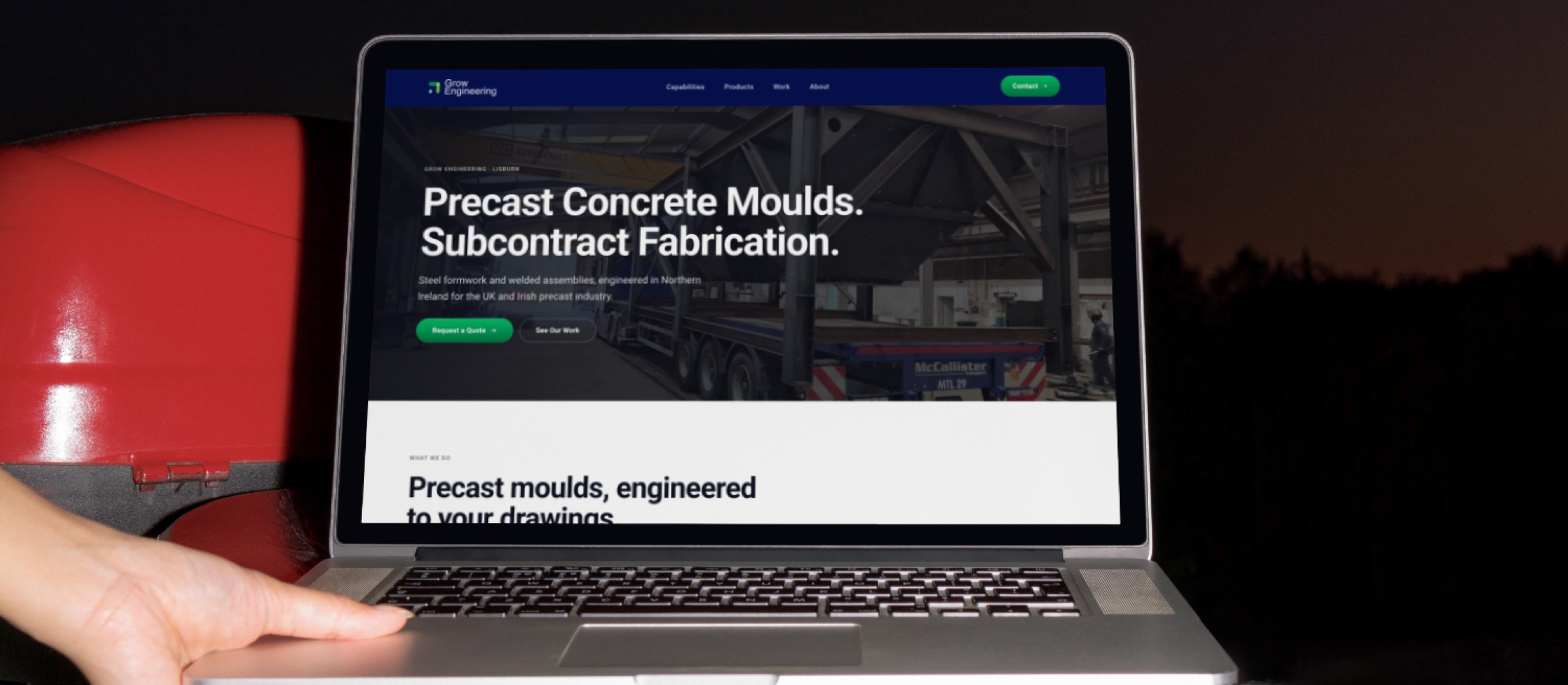
An engineering manufacturer with decades of workshop capability was losing access to the larger contracts their operations could serve. Buyers were self-qualifying them out before a sales conversation ever began. The digital presence had been inherited from a legacy site and read as a small, regional supplier rather than a manufacturer capable of tender-scale work.
A restrained, evidence-first website built around real workshop output, with two cleanly separated service lines and a content management system the operations team can run without agency involvement. The site was designed to close the credibility gap at first visit, so enquiries arrive further down the buying cycle and from buyers who already take the company seriously.
Credibility from the first visit
Service lines clearly separated
Agency time to publish new work
Challenges and opportunities
The workshop was producing bespoke formwork and subcontract steel fabrication at a standard that matched anything in the sector. The commercial problem sat upstream of production. Buyers at larger plants and civil contractors were making a decision about this company before they ever picked up the phone, and the decision was that the business looked smaller than it was.
The consequence was expensive. Enquiries that did arrive were from smaller jobs at tighter margins. Larger opportunities never reached the shortlist. The business had the capability to win tender-scale work but not the digital presence to be invited into it.
Commercial diagnosis
The existing site was a brochure. It described the company in the language of marketing rather than the language of the workshop. Procurement teams and production managers could not quickly answer the questions that matter to them: what do they actually make, at what tolerance, for whom, and can they deliver on the date promised.
We reviewed how comparable industrial suppliers were presenting themselves across the UK and Ireland, and where the credibility gap was opening and closing. The conclusion was clear. The market rewards restraint and evidence, not polish. Buyers in this space want to see the workshop, the finished work, and the specifications. Anything else slows them down.
The recommendation was to strip the site back to what a procurement team would actually use and let the workshop output do the selling. No hero carousels, no stock imagery, no editorialised copy. Real work, shown properly, with the specifications alongside.
Positioning
The positioning work separated two distinct revenue lines that the previous site had muddled. The two services sit in different purchasing processes and serve different buyers. Combining them on one page meant neither audience found what they needed quickly enough.
The new structure gives each service line its own credible entry point, its own capability narrative, and its own conversion path. A production manager specifying a job now reaches the right page in one click. A contractor with a fabrication package does the same. The clarity reduces friction at exactly the point where buyers decide whether to enquire or move on.
Website design and development
The site was built for the buyer, not the brand. Hero splits rather than carousels. Specification tables rather than marketing copy. Real photography of real jobs rather than stock industrial imagery. The layout favours density and evidence over white space for its own sake.
Every page has a single commercial job. The capabilities page qualifies the buyer into the right service line. The service pages build the case for tender-scale work through detail and proof. The project pages carry the weight of the argument, each one documenting a completed job that a procurement team can assess against their own specification.
Technical SEO was mapped against the searches buyers actually run at the specification stage. These are narrow, technical queries that signal real intent: specific product categories and regional fabrication capabilities. The site was structured to appear for those queries, not for generic industry terms that generate low-quality traffic.
Content management
The site sits on a content management system built for the way the operations team actually works. New projects can be photographed on delivery day and published the same afternoon. Product ranges, service content, and capability pages are all editable without agency involvement.
This matters commercially. Every job that ships becomes a piece of sales collateral the week it completes. The gallery compounds over time. Buyers assessing the business twelve months from now will see twelve months of additional proof, produced by the workshop itself rather than paid for through agency retainers.
Conversion flow
The enquiry pathway was designed around the behaviour of serious buyers. Procurement teams send drawings and specifications. Production managers want a direct route to a quote on a specific job. The form accepts file uploads, captures the information needed to scope the work, and avoids the generic contact noise that wastes operational time.
The same route works for smaller standard-range enquiries, with a lighter path for buyers who do not need a bespoke quote. One system, two speeds, so the sales team spends its time on live opportunities rather than triaging the inbox.
The commercial argument
The site was not built to look good. It was built to remove the reasons a tender-scale buyer would quietly disqualify the supplier before the first call. Every decision was made against that commercial test. If an element did not contribute to credibility, clarity, or conversion, it did not ship.
Results
The new website positions the business as a serious manufacturer rather than a small regional supplier. Procurement teams and production managers can now arrive at the site with a drawing in hand and leave with enough information to progress an enquiry. First contact starts warmer, from buyers who have already qualified the supplier in their own heads.
The operations team owns the content going forward, which means every job that ships adds to the commercial case without agency involvement. The infrastructure is in place to sustain the positioning the site has established, rather than relying on a single launch moment.
This is the work that does not look like marketing, and that is the point. In industrial B2B, restraint is the differentiator. The buyers who specify tender-scale work reward the suppliers who respect their time. It is the same philosophy that shapes our manufacturing branding practice.